Henri to Yvette.
650 Gen Tpt Coy
Italy
10 April 1944
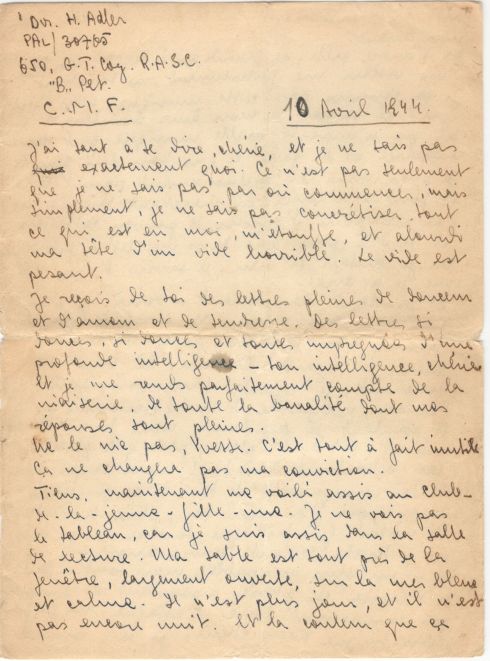
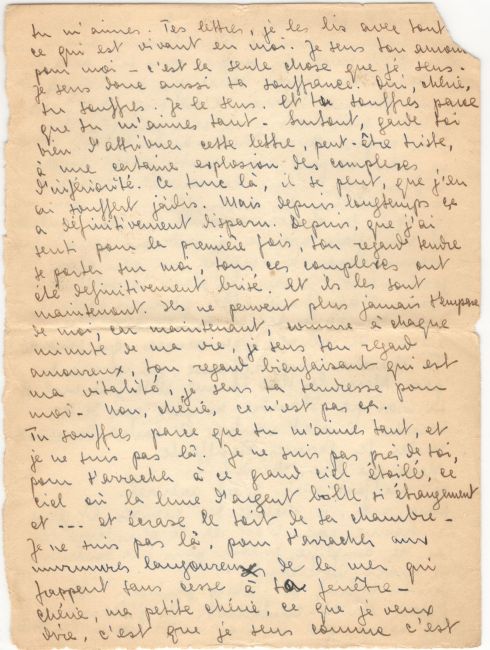
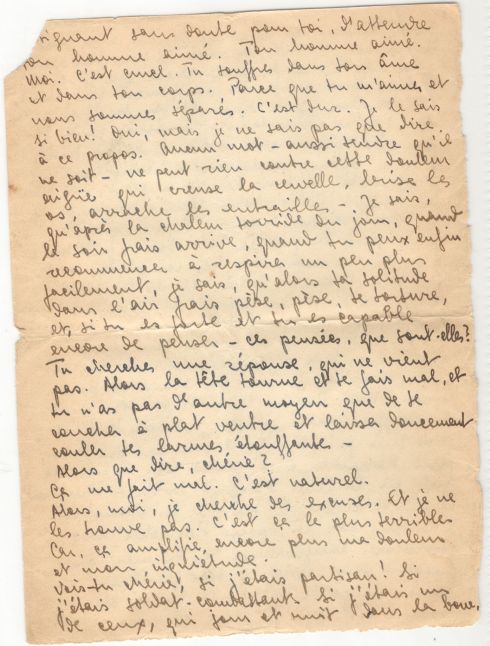
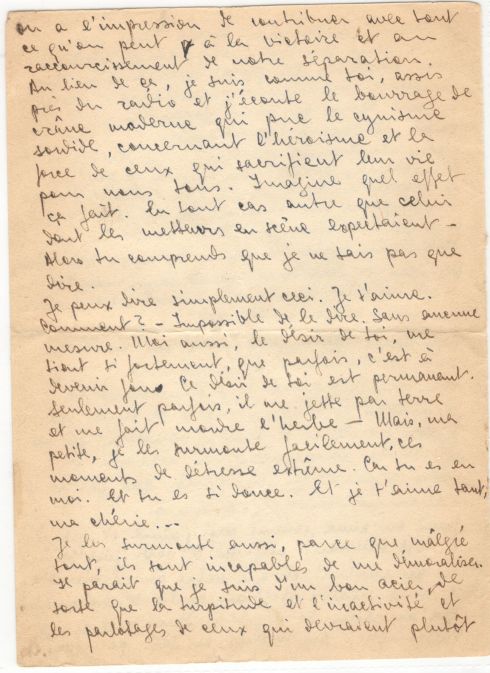
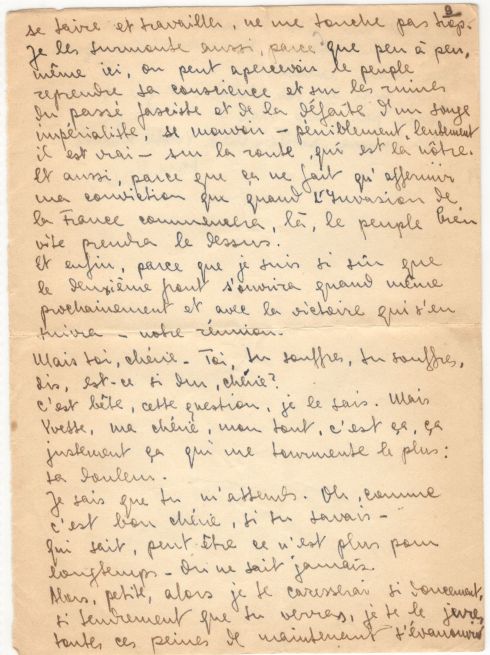
I have so much to say to you, darling…. I receive your letters filled with sweetness and love and tenderness. Letters so sweet, so filled with profound intelligence, darling. And I am perfectly aware of the silliness and banality, which fill my replies. It’s useless to deny it, Yvette. It won’t change my convictions.. I’m in the Club, with the naked girl. I can’t see her because I’m seated in another room…. I know how you love me. I read your letters. I feel your love for me- it’s the only thing that I feel.. I feel your suffering. Yes, darling, you are suffering. I feel it. Guard against thinking this letters an expression of an inferiority complex. I may have suffered that before but it has definitely disappeared for a long time now. Since I felt for the first time your tender regard for me…. You are suffering because you love me so much and I am not there, near to you…. I feel for you in the terrible heat of the day, in the freshness of the evening, your solitude makes you cry. What can I do? What can I say?
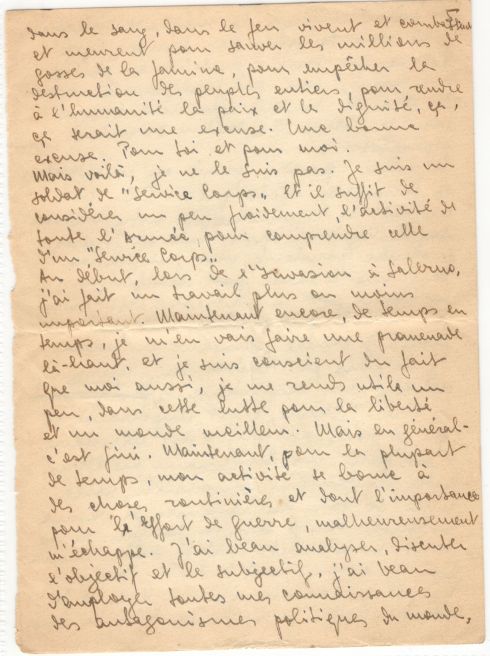
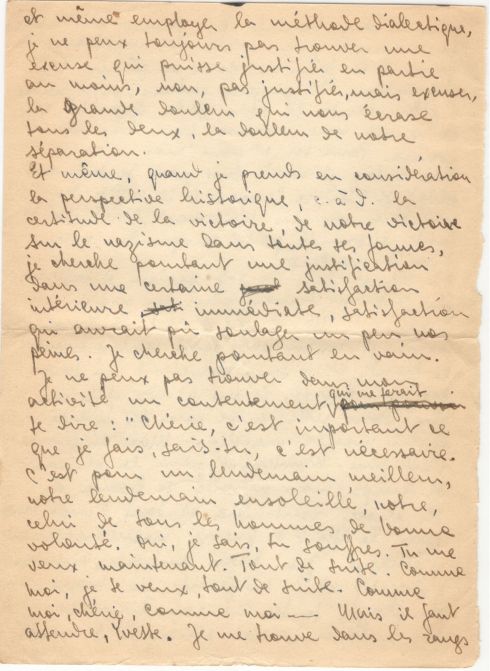
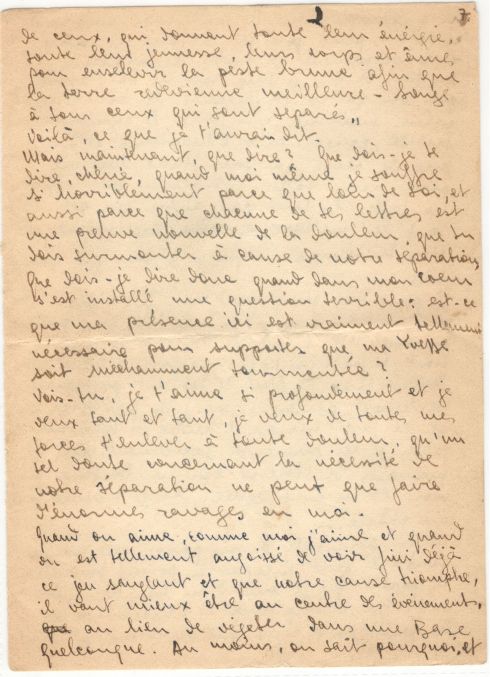
…. If I were a partisan! If I were a fighting soldier. If I were one of those who day and night in the mud, in the blood in the fire lived and fought and died to save millions of youngsters from famine, to prevent the destruction of whole peoples, to bring peace to humanity, that would be an excuse. A good excuse for you and for me,. But I’m not. I ‘m a soldier in the” Service Corps”(Eng)…. At the beginning, during the invasion of Salerno I did a more or less important job. Even now, from time to time, I make a journey up high and I am conscious of the fact that I too and being a bit useful in this struggle for liberty and a better world. But in general, it is over. For the most part, now, my is bounded by routine matters whose importance for the war effort, unfortunately escapes me. I could well analyse, discuss, objectively and subjectively, using all y knowledge of the political antagonisms of the world, even employ the dialectical method, but I cannot always find an excuse that justifies the great unhappiness which wipes us both out, the unhappiness of our separation. Even when I take into consideration the historical perspective, that is the certitude of our victory over Nazism in all its forms, I seek for a justification in a certain interior and immediate satisfaction which should be able to assuage our pain. However I seek in vain. I cannot find in my activity a contentment which would enable me to say:”Darling, it’s important, what I’m doing, you know; it’s necessary. …” But now, what can I say? I know you love me and wait for me and are sad. That saddens me more than anything.


 tom rigby - melbourne